
Indian stock markets are poised for volatility this week, driven primarily by the outcomes of five state assembly elections, ongoing high crude oil prices amid West Asia tensions, and the release of Q4 corporate earnings, according to market analysts.

We who were dreaming of being the third largest economy in dollar terms, have slid back to sixth, thanks to the falling rupee. We are moving about with begging bowls for investments and trade opportunities, which will be a while in materialising, if ever, notes Shreekant Sambrani.

The Supreme Court has modified its previous order regarding three academics involved in a controversial NCERT textbook chapter on corruption in the judiciary, allowing government bodies to make independent decisions about their association with the academics.

The recipe for Indian higher education institutions to succeed in the global markets is excellence in academics, promoting contemporary socially relevant material, and enabling individuals (learners) to realise their full potential, suggests N Ravichandran.

The Indian Institute of Science (IISc) and Groww Foundation have launched a semiconductor skill development programme to train the next generation of talent, with a focus on encouraging participation from women and young students.

Indian markets on Dalal Street rallied sharply as easing tensions in the US-Iran conflict and stable oil prices boosted sentiment. Track Nifty 50 and BSE Sensex performance and key global triggers.

Indian benchmark indices, Sensex and Nifty, opened lower on Tuesday, driven by a surge in global crude oil prices and continued outflows by Foreign Institutional Investors (FIIs), reflecting fragile market sentiment influenced by external factors.

Researchers at IIT Bombay have discovered that heatwaves in the Indo-Gangetic Plains are primarily caused by local land and weather conditions, rather than hot air originating from elsewhere, emphasising the need for location-specific early warning systems.

India has launched its first repository of data on major psychiatric disorders, CALM-Brain, in Bengaluru. This initiative aims to systematically document details of patients with mental illness to improve diagnosis and treatment.

A team of scientists has identified a 'potentially dangerous' proglacial lake at 16,500 feet in Arunachal Pradesh's Mago Chu basin, a critical headwaters region of the Brahmaputra, warning of a possible Glacial Lake Outburst Flood (GLOF) due to rapid glacier transformation.
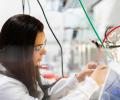
Prime Minister Narendra Modi has praised the Anveshana programme of Prayoga Institute of Education Research for its work in making scientific research accessible to school students. The programme, launched in 2022, supports student-led research projects and provides hands-on learning opportunities.

Indian benchmark indices Sensex and Nifty experienced a significant tumble in early trade, driven by surging global oil prices, continuous outflows by Foreign Institutional Investors (FIIs), and persistent geopolitical uncertainties, particularly in West Asia.

Indian benchmark equity indices, Sensex and Nifty, closed lower due to investor caution over rising bond yields, a weaker rupee, and fresh fuel price hikes, which have revived inflation concerns.

Researchers at IIT Guwahati have developed a framework for designing earthquake-resistant 3D-printed concrete walls, potentially revolutionising construction in seismic zones.

A new research collaboration between India and Sweden is using artificial intelligence to accelerate the discovery of peptide-based therapeutics for pneumonia, aiming to shorten drug development timelines and combat drug-resistant infections.
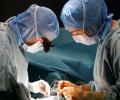
Doctors at AIIMS, Delhi, have successfully performed a simultaneous pancreas-kidney transplant after 18 years, marking a significant advancement in organ transplantation in India. The surgery was performed on a 30-year-old patient with end-stage renal disease caused by Type 1 diabetes.

A new study has found that high calcium levels in microglia, a specialised group of immune cells in the brain, could be linked to anxiety, potentially paving the way for new treatments for neuropsychiatric disorders.

NITI Aayog member Gobardhan Das asserted that India possessed a rich scientific tradition that suffered setbacks during centuries of foreign domination, with its repository of knowledge systematically destroyed by invaders.
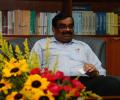
The Indian Council of Medical Research (ICMR) has recommended HemoQR, a low-cost, portable anaemia screening tool developed at IIT Kharagpur, for its simple and rapid method of checking haemoglobin levels using a smartphone.

Indian equities on Dalal Street saw volatility as global market trends and weak rupee impacted investor sentiment. Track Sensex, Nifty50 movement and key market drivers for May 5, 2026.

The Karnataka government has announced the installation of a 25-qubit quantum computing system at the Indian Institute of Information Technology (IIIT), Dharwad and IIIT-Raichur, enhancing the state's quantum computing ecosystem.

An expert from the ICMR's National Institute of Virology addresses concerns about hantavirus cases detected on a cruise ship, stating there is no immediate public health threat to India and that the cases appear isolated.

The Indian Institute of Technology Kharagpur has announced the launch of a new school dedicated to digital learning, applied artificial intelligence, and machine learning, supported by a significant philanthropic commitment.

Indian markets on Dalal Street rallied sharply as easing tensions in the US-Iran conflict and stable oil prices boosted sentiment. Track Nifty 50 and BSE Sensex performance and key global triggers.

Andhra Pradesh is set to launch India's first indigenously built, open-access quantum computers, marking a significant step towards building a sovereign quantum hardware ecosystem. The initiative aims to position the state as a global hub for quantum technology and enable applications in various sectors.

Union Minister Jitendra Singh inaugurated a new biotechnology facility and dedicated a national facility for recombinant cells and sensors at the Rajiv Gandhi Centre for Biotechnology in Thiruvananthapuram, highlighting India's focus on biotechnology and its potential for economic growth.

The Indian rupee depreciated by 28 paise to settle at 93.44 against the US dollar, influenced by ongoing uncertainties surrounding West Asia peace negotiations, volatile crude oil prices, and the Reserve Bank of India's recent adjustments to non-deliverable forward market regulations.
Researchers at the National Institute of Technology (NIT), Rourkela have patented a fully automated system that uses thermal imaging and gait recognition to detect unauthorised access in large buildings, offering a next-generation security solution.
Indian stock markets extended their gains for a third consecutive day, with the Sensex climbing 753 points and the Nifty closing above 24,550, driven by a drop in crude oil prices and optimism surrounding potential peace talks between Iran and the US.

The Indian stock market is poised for a volatile week, influenced by the Reserve Bank of India's monetary policy decision, crucial global macroeconomic data, and the escalating geopolitical tensions in West Asia, according to market analysts.
Indian benchmark indices Sensex and Nifty experienced declines due to a sharp rally in crude oil prices, continuous foreign fund outflows, and geopolitical uncertainties. Regulatory developments in the banking sector, particularly the implementation of the Expected Credit Loss (ECL) framework, also contributed to the selling pressure.

Indian equities on Dalal Street saw volatility as global market trends and oil price hike impacted investor sentiment. Track Sensex, Nifty50 movement and key market drivers for Apr 23, 2026.

A new study reveals that widely used heart disease risk calculators may not accurately identify Indians at risk, potentially leading to underestimation of risk and delayed treatment.

The upcoming Tata Sons board meeting in June could possibly throw some light on several critical issues that may have a bearing on the future of the corporate behemoth.

The Indian rupee appreciated by 23 paise to settle at 92.91 against the US dollar, driven by a weakening American currency, retreating crude oil prices, and renewed foreign institutional investor (FII) inflows amid increasing hopes of easing geopolitical tensions.
Indian benchmark indices, Sensex and Nifty, closed almost unchanged in a volatile session as investors reacted cautiously to mounting geopolitical headwinds and a significant jump in crude oil prices, with Brent crude surging to USD 94.68 per barrel.

A new study reveals that insects' lightning-fast reactions are due to a 'turbo boost' feature in their brains, which could inspire more energy-efficient robots and self-driving cars.

Indian benchmark equity indices, Sensex and Nifty, experienced a decline in early trade, ending a three-day rally, primarily due to heavy selling in IT stocks and concerns over prolonged instability in West Asia.
The Indian rupee depreciated by 52 paise to settle at 93.35 against the US dollar, driven by failed US-Iran peace talks, surging crude oil prices due to a potential US blockade of Iranian ports, and a global flight to the greenback. This geopolitical uncertainty is also leading to foreign capital withdrawal from domestic equities.
Researchers at Birla Institute of Technology-Mesra have developed a brain-computer interface (BCI) system that translates brain signals into real-time wheelchair navigation commands using a hybrid quantum-enhanced deep learning model.
